Brakes rarely fail without warning. They squeal, grind, pulse, pull, or change how the pedal feels, usually weeks before stopping power is seriously reduced. The problem is that the early warnings are easy to turn the radio up over, especially on familiar Indian Trail roads where you know every stop sign by heart. Knowing what each sound and feeling usually means helps you judge what needs attention this week and what needs attention today.
Noises: squeal, grind, and click
A high pitched squeal when you brake lightly is often the wear indicator, a small metal tab built into the pad that touches the rotor when the pad material gets thin. It is designed to be annoying, and it means the pads are near the end of their life. A grinding sound is different and worse: the pad material is gone and metal is cutting into the rotor. Driving on grinding brakes damages rotors quickly and lengthens stopping distances.
Clicking or rattling over bumps can point to loose hardware or a worn anti rattle clip. It is less urgent than grinding, but loose brake hardware should still be inspected rather than assumed harmless.
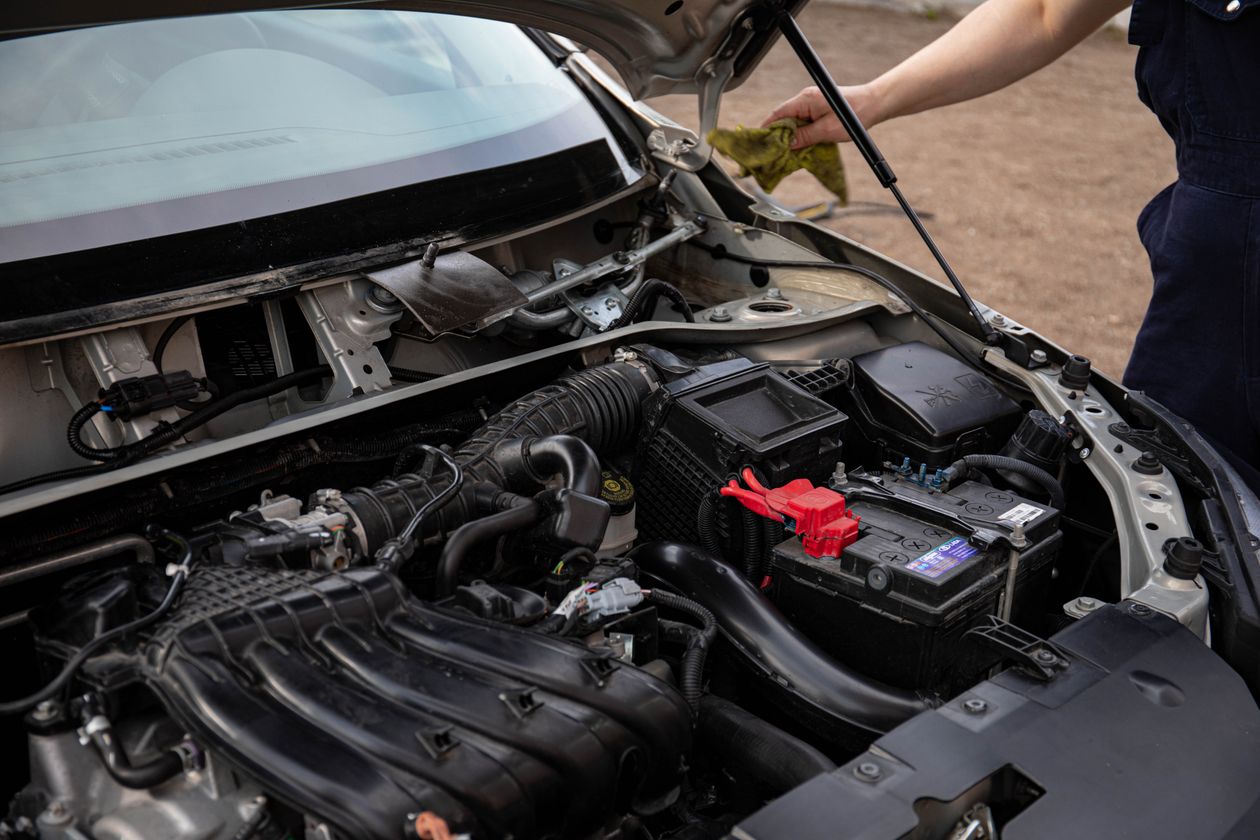
Feel: soft pedal, pulse, and pull
A pedal that sinks slowly, feels spongy, or has to travel farther than it used to can mean air or moisture in the hydraulic system, worn fluid, or a developing leak. That is a same week problem, and if the pedal goes close to the floor, it becomes a do not drive problem. A pulse in the pedal or steering wheel during braking usually means a rotor has warped or worn unevenly, often after heavy braking on a hot day followed by sitting at a long light with the brakes held.
Pulling to one side under braking points to uneven braking force: a sticking caliper, a collapsed brake hose, or pads worn very differently side to side. On wet roads around summer thunderstorms, uneven brakes can swing a car more than drivers expect.
What an inspection actually checks
A proper brake inspection measures pad thickness, checks rotor condition and thickness, looks for leaks at calipers, hoses, and lines, tests fluid condition, and confirms the parking brake holds. It also catches the uneven wear patterns that tell a technician something else, like a caliper or hose, is causing pads to wear out early on one side.
| Symptom | Likely cause | Urgency |
|---|---|---|
| Squeal when braking | Wear indicator or glazed pads | Schedule soon |
| Grinding | Pads worn to metal | Right away |
| Soft or sinking pedal | Fluid, air, or a leak | Right away |
| Pulse in pedal | Warped or uneven rotor | Schedule soon |
| Pull to one side | Sticking caliper or hose | Schedule soon |
Dashboard lights and the parking brake
Two brake related lights deserve respect. The red brake warning light can mean the parking brake is on, but it can also mean low fluid or a hydraulic fault, and if it stays on after the parking brake is released, treat it as a stop and check signal, not a suggestion. The amber ABS light means the anti lock system has a fault; normal braking usually remains, but the anti lock function that keeps wheels from locking in a panic stop or on a wet road may not be there when you need it, which in a Carolina thunderstorm is exactly when you need it.
The parking brake itself is part of the system. Use it regularly, especially on automatics parked on grades around Indian Trail's neighborhoods, because a parking brake that is never used can seize from corrosion and fail the one time the transmission's parking pawl is not enough. If the lever or pedal travel changes noticeably, or the car creeps on a hill with it set, have the cables and rear brakes inspected.
One last test you can do in your own driveway: on a quiet, flat street at low speed, brake firmly and notice whether the car tracks straight and stops in a reasonable distance without drama. You are not testing limits, just confirming the basics feel normal. Any pull, grind, or long pedal in that gentle test will only be worse in a real emergency stop on Highway 74, so treat a failed driveway test as your answer about urgency.
Common questions
How long do brake pads usually last?
It depends on driving pattern more than mileage alone. Stop and go local driving wears pads faster than highway commuting, which is why inspection at regular intervals beats guessing from mileage.
Can I replace just the pads and skip the rotors?
Sometimes, if the rotors are thick enough, smooth, and not warped. Reusing a damaged or too thin rotor with new pads shortens pad life and can bring the noise and pulse right back.
Is a squeal always the pads?
Not always. Glazed pads, dust, and light surface rust after rain can squeal briefly. A squeal that persists, changes with wear, or turns to grinding needs an inspection to sort out.
Photos in this guide are representative stock images.
← All guides from Tek Custom Automotive← Back to Tek Custom Automotive