There is no worse week for air conditioning trouble than a humid Indian Trail week in July, when a car parked in the sun can feel like an oven before you reach the end of the street. When the vents blow warm or barely cool, drivers often assume the system just needs a recharge. Sometimes it does. More often, low refrigerant is a symptom of a leak, and refilling without finding the leak buys a few weeks of cool air at best.
How the system works, briefly
The compressor pressurizes refrigerant, the condenser in front of the radiator sheds heat from it, and the evaporator inside the dash absorbs heat from cabin air. A blower pushes that cooled air through the vents. A fault anywhere in that loop, or in the fans and controls around it, shows up the same way at the vents: not cold enough. That is why diagnosis starts with pressures, temperatures, and a leak check rather than a guess.
The usual causes, in plain order
Low refrigerant from a slow leak is the most common cause, often at a hose connection, the condenser, or the compressor shaft seal. A condenser clogged with pollen, bugs, and road debris cannot shed heat well, and North Carolina pollen season coats everything under the hood each spring. A failing condenser or radiator fan matters most at idle and in traffic, which is why some cars cool fine on the highway and blow warm at stoplights.
Electrical faults are common too: a compressor clutch that will not engage, a bad pressure switch, or a blend door inside the dash stuck between hot and cold. A cabin air filter choked with pollen and leaves can also strangle airflow so badly that a healthy system feels weak.

What you can check yourself
Confirm the temperature is set to cold, recirculation is on for the fastest cool down, and the condenser fan runs when the A/C is switched on. Check whether the problem is airflow or temperature: weak airflow with cold air points toward a filter or blower issue, while strong airflow that is warm points toward the refrigerant loop. Note whether it cools at speed but not at idle, because that single detail narrows the diagnosis considerably.
Skip the do it yourself recharge cans if the system has leaked down more than once. Overcharging makes cooling worse, and refrigerant handling is regulated for a reason. A proper service recovers what is left, evacuates the system, finds and fixes the leak, and charges the exact amount by weight.
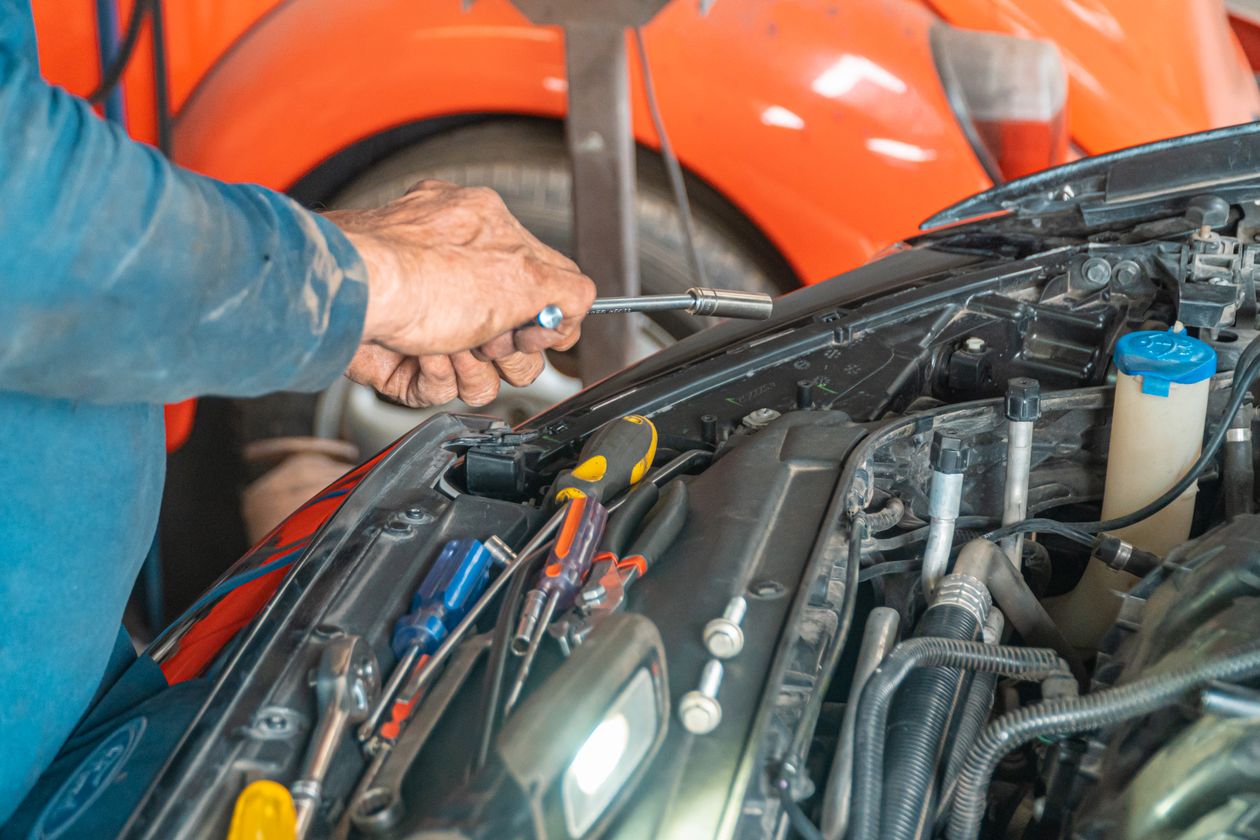
- Temperature set to max cold and recirculation on
- Strong airflow from vents, or weak
- Cooling at highway speed versus at idle noted
- Condenser fan running with A/C on
- Cabin air filter condition checked
- Any hissing, clicking, or belt noise noted
Odors, noises, and what they mean
A musty smell when the A/C starts usually traces to moisture and mildew on the evaporator, common in humid climates where the system sweats all summer. It is unpleasant rather than dangerous, and cleaning treatments and a fresh cabin filter solve most of it. A sweet smell with fogging windows is more serious and can point to a heater core leak, which belongs on the fix soon list. Clicking when the compressor engages, squealing belts under A/C load, and a compressor that cycles on and off every few seconds all tell a technician something specific about pressures and clutch condition.
One more summer specific point: a car that idles for long school pickup lines with the A/C at full blast is working its cooling system at the hardest combination there is, high load and low airflow. If the temperature gauge creeps up during those idles, that is a cooling system warning that shares parts with the A/C problem, the fans and condenser, and it should be diagnosed as one system, not two separate mysteries.
Prevention is mostly shade and airflow. Parking in shade or using a windshield shade lowers the cabin's starting temperature dramatically, which shortens the brutal first five minutes every A/C system faces in August. Keeping the condenser rinsed of pollen and debris after spring, and changing the cabin filter on schedule, costs little and preserves the cooling the system was designed to deliver when the first heat wave arrives.
Common questions
Why does my A/C cool on the highway but not at stoplights?
Airflow across the condenser drops at idle, so a weak fan or a debris clogged condenser shows up first in traffic. It can also mean refrigerant is slightly low.
How often should A/C be serviced?
There is no fixed interval for a sealed, healthy system. Service is needed when cooling fades, a component is replaced, or a leak is found and repaired.
Is warm A/C a sign the compressor is dead?
Not necessarily. More systems blow warm from low refrigerant, fan faults, or control problems than from a failed compressor. Testing comes before that conclusion.
Photos in this guide are representative stock images.
← All guides from Tek Custom Automotive← Back to Tek Custom Automotive